
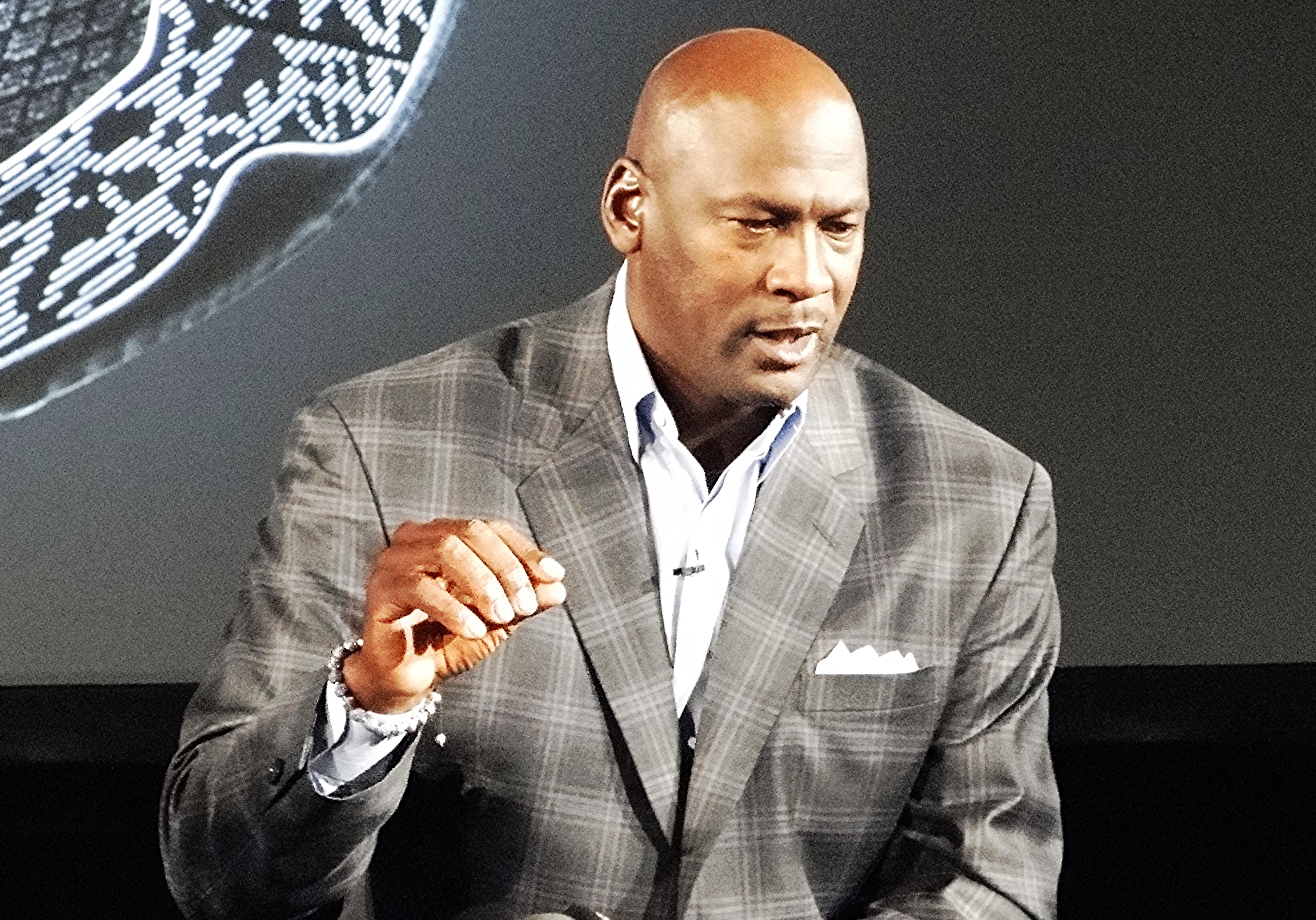
As a founder or CEO in the Middle East, your reputation is not just a part of your brand; it is the currency you trade in. It’s built over years of late-night meetings in Dubai, handshakes in Riyadh, and delivering on your promises when everything is on the line. But in our hyper-connected world, what happens when that hard-won reputation is threatened in a matter of hours by something you didn’t even do?
A recent incident involving the global sports icon Michael Jordan offers a powerful, real-world case study in crisis management, digital misinformation, and the enduring value of trust – lessons that are critically relevant to every leader navigating the dynamic MENA business landscape.
The Anatomy of a Digital Firestorm
On February 16, 2026, a five-second video clip from a NASCAR race in the United States began to spread across the internet like wildfire. It showed Michael Jordan, co-owner of the winning 23XI Racing team, interacting with the six-year-old son of his driver, Tyler Reddick, during a chaotic victory celebration. The clip, stripped of all context, appeared strange to some.
Within hours, it had accumulated millions of views, and a negative narrative took hold. Social media users declared Jordan “canceled,” and the outrage grew so intense that some fans posted videos of themselves throwing away their expensive Air Jordan sneakers in protest. The story was picked up by news outlets globally, and a reputation that took a lifetime to build was under attack.
The reality, however, was mundane. The celebration was messy, with champagne and ice water being sprayed everywhere. The young boy had gotten ice dumped down his back, and Jordan, in a fatherly moment, was simply helping to get it out of his shirt. It was an act of kindness, twisted by the internet into something malicious. The incident serves as a stark reminder of how quickly a narrative – true or not – can be forged and amplified in the digital age, a phenomenon that business leaders in the rapidly digitizing MENA region must be prepared for.
The Psychology of the Digital Mob
To dismiss this as mere “internet drama” would be to miss the critical lesson. The rapid spread of this false narrative wasn’t random; it followed a predictable psychological pattern.
Author Dan Ariely, in his work on irrational behavior, describes a concept that can be likened to a “funnel of misbelief.” It often begins with an emotional trigger – in this case, a confusing video that made people feel uneasy. This uncertainty creates a void that the human brain is desperate to fill with a simple, clean story. Often, that story requires a villain.
Once a villain is chosen, another powerful cognitive bias takes over: Social Proof. This principle, detailed by psychologist Robert Cialdini, explains that we often determine what is correct by finding out what other people think is correct. When we see thousands of people sharing angry comments, our brain assumes there must be a valid reason. Each share, like, and comment acts as a validator, making the false narrative feel true.
For leaders in the MENA region, where community consensus and social validation hold significant weight, understanding this principle is not just academic – it’s essential for survival. Your brand’s perception can be shaped in an instant by a crowd that may be operating on incomplete or incorrect information.
The Leadership Response: A Playbook for the Modern CEO
The most valuable insights from this incident came not from Jordan, who remained silent, but from the boy’s father, Tyler Reddick. His response was a masterclass in modern crisis management, offering a clear playbook for any leader facing a reputational threat.
First, he did not engage the mob. Reddick refrained from getting into public arguments or issuing defensive statements on social media. He understood a fundamental truth of the digital age: arguing with an online mob only gives it more oxygen. The fire of outrage feeds on engagement, and the fastest way to extinguish it is often to starve it.
Second, he led with the relationship. When asked directly by a reporter, Reddick didn’t just deny the accusations; he calmly reframed the entire situation around the context of his long-standing relationship with Jordan. He spoke of their friendship and the trust between their families. His defense was not a denial; it was a testament to character. He made the story about the years of trust, not the five seconds of video. When TMZ tried to press him further, his team simply shut it down.
This is a crucial lesson for leaders in the Middle East, where business is deeply relational. The strength of your partnerships and the trust you’ve cultivated within your network are your most formidable defenses.
In a crisis, a third-party validation from a trusted partner is infinitely more powerful than any press release you could write.
The Ultimate Asset: Building Trust Before the Crisis
What this incident ultimately reveals is that the most critical work of reputation management happens long before the crisis ever hits. Reddick’s defense was believable because the trust between him and Jordan was authentic and established over years. It wasn’t a story crafted for PR, it was the truth of their relationship.
As entrepreneurs and executives building ventures in the GCC and beyond, we are often focused on growth, innovation, and market share. But the Michael Jordan incident is a powerful reminder that we must invest just as heavily in building our “trust equity.”
This means fostering genuine relationships with employees, partners, and customers. It means operating with integrity, even when no one is watching. It means ensuring your character and your company’s character are so well-established that when a false narrative emerges, your network becomes your first and most passionate line of defense.
In our region, where a good name is paramount, this is not a soft skill, it is a core business strategy. The digital world is unpredictable, and storms will come. But a reputation built on a foundation of authentic trust is not easily washed away. It is the bedrock that allows you to weather the storm and emerge stronger.
The real lesson from Michael Jordan’s brief “cancellation” is a timeless one: invest in your relationships, guard your integrity, and let the trust you build be the story that speaks loudest.