
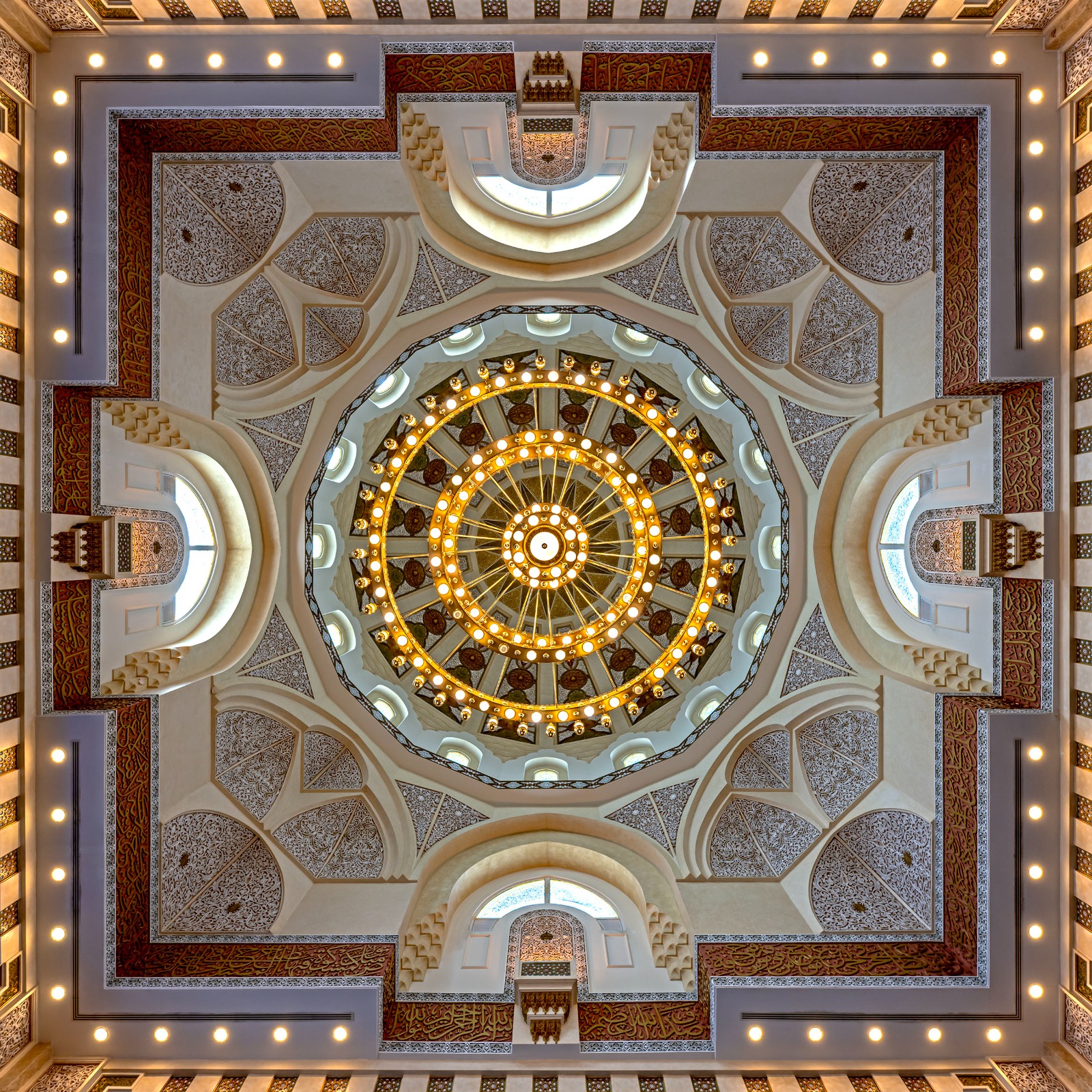
A photojournalist is never merely a man holding a camera. He is, rather, a collector of fugitive moments — a witness who steals fragments from time and returns them to humanity washed in light, polished by meaning, and redeemed by beauty. Among those rare men who devoted their lives not simply to photography, but to seeing itself, stands Imadeddin Alaeddin: son of the green plains of Idlib, fostered by the grandeur of Aleppo, and possessed of that distinctly Eastern gift of turning memory into art.
He began his journey in the age when photography still possessed mystery. Those were the days of film rolls, darkrooms, and chemical rituals; when an image emerged slowly from darkness like a secret confessing itself to light. Photography was then an act of patience rather than convenience, and every frame demanded instinct, discipline, and faith. One did not take hundreds of photographs in hope of stumbling upon excellence. One waited for the precise union of eye, heart, and destiny.
Then came the digital revolution — swift, merciless, dazzling. Many artists became strangers to their own craft, trapped between nostalgia and modernity. Yet Imadeddin Alaeddin crossed that threshold with remarkable grace. He betrayed neither the poetry of the old world nor the possibilities of the new. Instead, he carried the soul of classical photography into the digital age, proving that technology is only noble when it remains a servant to vision, never its master.
Across Syria and the United Arab Emirates, his career unfolded as a masterclass in visual journalism. He photographed political events, public ceremonies, and the pulse of daily life with the attentiveness of a chronicler who understood the dignity hidden within ordinary moments. Yet his lens was never confined to reportage alone. He wandered naturally into wildlife photography, travel imagery, and sports photography, as though searching in every landscape for another expression of movement, grace, and human wonder.
But behind the camera lived another artist altogether.
Few know that Imadeddin Alaeddin is also an accomplished musician, skilled in playing several instruments. Yet it was the violin that claimed his spirit most completely. Perhaps because the violin resembles photography itself: both depend upon tension, silence, precision, and emotional truth. The violin does not tolerate false feeling, nor does the camera forgive a dishonest eye.
One senses this musicality in his photographs. His compositions possess rhythm; his use of symmetry feels orchestrated rather than arranged. Light in his work does not merely illuminate objects — it performs upon them. His images seem less captured than composed, as though each frame were a movement within a larger symphony of stillness.
And it is precisely this union of discipline and lyricism that culminated in his most remarkable recent body of work: the interior photography of mosque domes across the seven Emirates.
What Imadeddin Alaeddin achieved in this project was not documentation alone, but revelation. While most eyes admire the exterior majesty of mosques, he directed his gaze upward — toward the hidden heavens suspended above worshippers. In these domes, he discovered geometry transformed into devotion, ornament transformed into prayer, and architecture transformed into metaphysics.
Each dome in his photographs appears like a celestial manuscript written in light. Arabesques unfold with hypnotic elegance; colours breathe softly through silence; symmetry becomes a form of spiritual music. One no longer feels that one is looking at ceilings, but rather at meditations suspended between earth and eternity.
What grants this work its singular distinction is not merely its beauty, but its completeness. Imadeddin Alaeddin undertook a visual journey through the mosques of all seven Emirates, creating a unified artistic testimony to the spiritual and architectural identity of the United Arab Emirates. In doing so, he ventured into territory few photographers had imagined, and perhaps none had pursued with such coherence, reverence, and aesthetic intelligence.
Here, the seasoned photojournalist evolved into something rarer still: a visual poet of sacred space.
For journalism had taught him how to observe the world, but the domes of mosques taught him how to listen to silence.
And so the story of Imadeddin Alaeddin becomes more than the biography of a photographer. It is the story of an artist who journeyed from the crowded urgency of newspapers to the contemplative stillness of spiritual architecture; from the fleeting event to the eternal symbol; from documenting life to interpreting its hidden grace.
From Idlib’s green horizons to Aleppo’s noble memory, from the scent of darkrooms to the perfection of digital light, from the violin’s trembling strings to the illuminated geometry of mosque domes, Imadeddin Alaeddin has remained faithful to one eternal calling: to give light a soul, and to leave time itself more beautiful than he found it.