
As geopolitical tensions continue to escalate across the MENA, the pressure on the region’s venture ecosystem is becoming more tangible. The critical question is no longer whether the impact will be felt, but how boldly local ecosystems can respond.
In Qatar, the current crisis follows two major disruptions it has faced in recent memory—the COVID-19 crisis in 2020, and the regional blockade against the country from 2017 to 2021. And in each instance, Qatar’s leadership has been praised for its exceptional vision, resilience, and strategic crisis management.
Indeed, the country’s past performance has been reflected in a 2022 study by HEC Paris, Doha called Resilient Qatar: A Case of a Fast-Growing Entrepreneurial Ecosystem, which measured resilience across five key dimensions: internal market forces, national culture, government support, operating costs, and access to funding. The report noted that “Qatar may have been significantly more resilient to the shock of the COVID-19 pandemic than other countries, thanks to its experience of economic blockade and a fast-growing digital entrepreneurship ecosystem that is actively transforming the country’s economy.”
This is what local ecosystem players are betting on today to weather the consequences of developments in the region. So, what does the situation look like currently? To help answer this question and reflect the dynamics of the local ecosystem, I reached out to a few key ecosystem players in Qatar to capture their perspectives. One of these was Michael Lints, who’s based in Qatar as the Founding Partner for the MENA at Singapore-born Golden Gate Ventures. “Our fund has decided to continue investing and reviewing potential opportunities,” Lints shared. “We invest long-term, which means we take a multi-year view on the region and the opportunity set. The current situation has not changed our view of the region’s opportunities.”
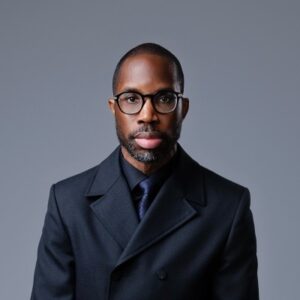
Michael Lints, Founding Partner – MENA, Golden Gate Ventures. Image supplied.
As for how founders in Qatar can best navigate this challenging time, Lints advised them to communicate proactively with stakeholders (investors, key clients, and partners) sharing how the current situation is impacting their business, what their expectations are, and whether they need support. Lints also urged them to avoid a passive approach and work on proactive scenarios around client management, delays in billing and receivables, and team wellbeing, including hosting town halls to give team members room to voice concerns. He also suggested moving fundraising conversations forward as early as possible if there are runway concerns or existing fundraising plans, as investors are still active and responsive to founder updates. “A number of event organizations and venture capital funds are hosting sessions for founders to share how to navigate these difficult times,” Lints added. “These are the moments where it is important for the ecosystem to continue to support each other and maintain an open-door policy.”
Alchemist Doha is the Qatari arm of the Silicon Valley-rooted global innovation network, and according to its Director of Investments, Muhannad Taslaq, the local ecosystem has shown remarkable solidarity. “The community came together with a shared conviction that Qatar’s strength lies in its leadership, its people, and the tight-knit bonds between them,” he said. “That closeness is what is carrying everyone through these critical times. The local ecosystem in Qatar is relatively new, especially at the startup level. It will continue to hold hands, push each other forward, and navigate these hard times, and when the storm clears, our ecosystem will be among the strongest in the region.”
On investment sentiment, Taslaq said that Alchemist Doha’s position is clear. “Smart capital does not disappear in conflict,” he pointed out. “It recalibrates. We are still backing founders who solve real problems for real people in this region. The risk profile has shifted, yes. But so has the urgency. If anything, I am more convinced than ever that we need to double down.” Taslaq also suggested that entrepreneurs should not pause or freeze in this climate. “The founders who keep building through moments like this are the ones who come out on the other side with real companies,” he said. “Protect your runway. Get closer to your customers. Double down on what actually works. Geopolitics will shift; your execution window will not wait.”
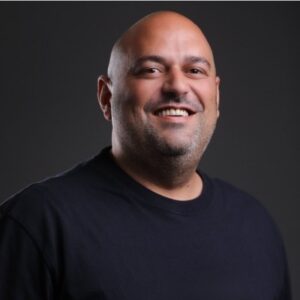
Muhannad Taslaq, Director of Investments, Alchemist Doha. Image supplied.
Taslaq’s views were echoed by Indica Amarasinghe, one of the Qatari startup ecosystem’s most active voices, who is the Chapter Director of the Doha branch of the global founders’ collective, Startup Grind. “Qatar is arguably better positioned than many markets in the region,” he declared. “And that’s because it combines state-backed institutional commitment with a leadership posture that is still publicly pushing for stability, confidence, and deescalation of tensions.” As for investor sentiment, Amarasinghe is of the opinion that the picture is much more nuanced than either “everything is frozen” or “nothing has changed.”
“Risk appetite generally becomes more selective in moments like this,” Amarasinghe explained. “Investors tend to back stronger teams, clearer governance, and businesses with revenue visibility or strategic relevance.” For founders, he said that the priority should be disciplined execution, and avoiding the assumption that capital will always be available on attractive terms. “But this does not mean panicking or making rash decisions, especially around staff reductions,” Amarasinghe added. “That is the very last step, and only if validated by data. This is also the time to tap into mentors for encouragement and to bounce off ideas. This is a moment for realism, not paralysis. Founders should act like operators, not spectators.”
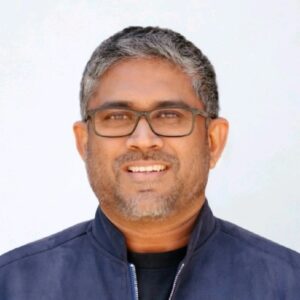
Indica Amarasinghe, Chapter Director, Startup Grind Doha. Image supplied.
Meanwhile, the solidarity in Qatar that Lints, Taslaq, and Amarasinghe described can be visible to anyone paying attention—indeed, a cursory visit to LinkedIn will reveal the breadth of resources made available by the local ecosystem. For instance, Qatar’s Ministry of Commerce and Industry, Invest Qatar, Qatar Financial Centre, and Qatar Development Bank have all initiated support hotlines and operations rooms to guide and address queries from businesses and investors in Qatar.
Ecosystem experts in the country have also come to ensure that founders aren’t left alone in this storm. Two timely and practical playbooks have emerged: Alchemist Doha’s Taslaq came out with Building Through Fire: A Playbook for MENA Founders Navigating Wartime, while Nayef Al-Ibrahim, Founding Partner and CEO of the Qatar-based innovation development and management company, Ibtechar, released Crisis Management for SMEs in the GCC: Lessons from the Front Line.
At the end of the day, the sentiment in Qatar seems to be that while uncertainty is inevitable, paralysis is not. Each time the Qatari startup ecosystem has faced a crisis, it did not simply recover; it recalibrated, rebuilt, and emerged ahead of where it started. Every crisis this ecosystem has weathered has produced a generation of founders, investors, and ecosystem builders who were shaped by the pressure and strengthened by it.
This moment is no different. Our bet is on public and private stakeholders to move with conviction and in unison to survive this disruption, and emerge from it stronger, more resilient, and globally competitive. Qatar has done it before. And it will do so again.
Read More: Qatar Development Bank Unveils Reyada Digital Platform To Support Local Businesses