
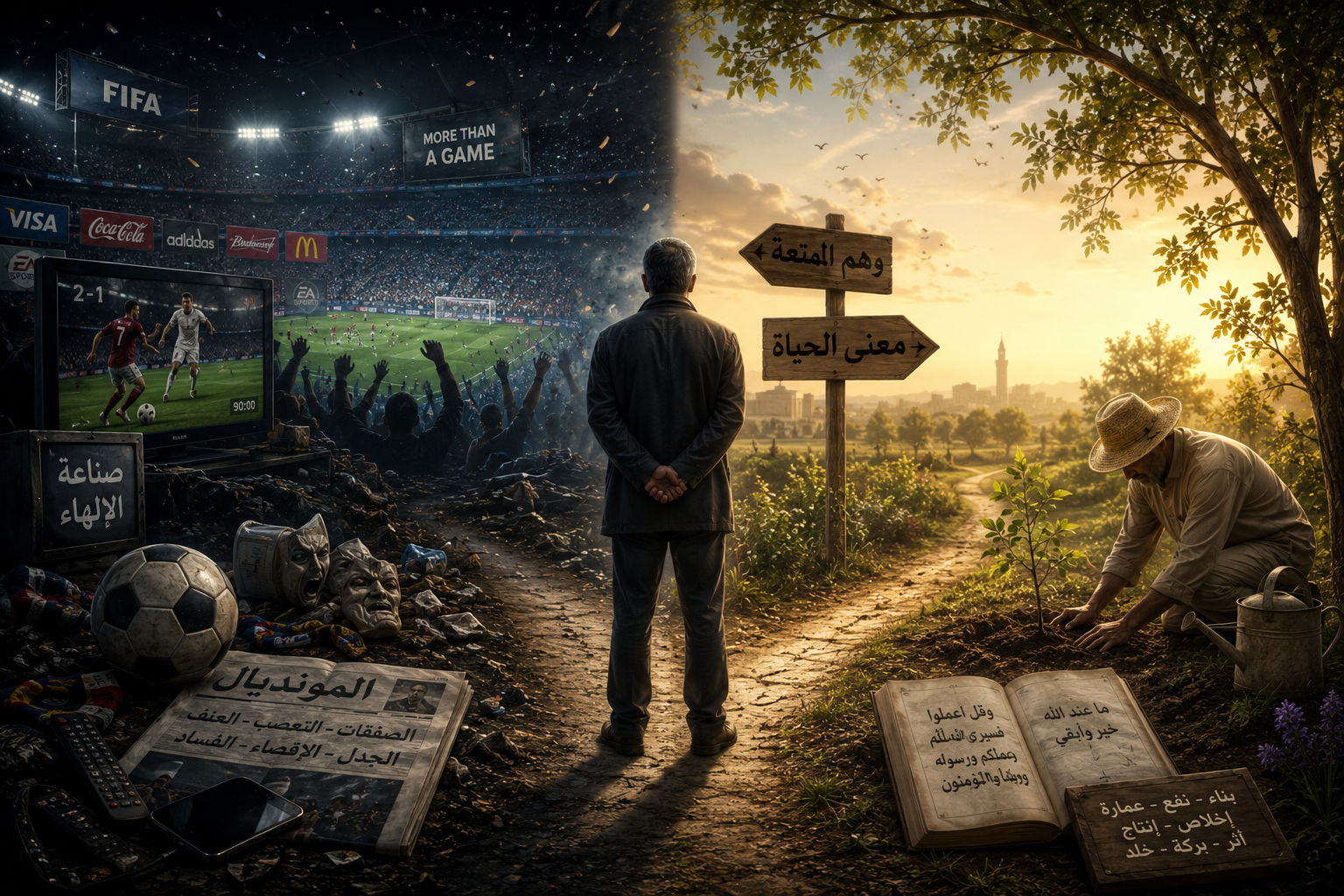
Until recently, football had occupied only the outer edges of my attention. For most of my life, the FIFA World Cup was something I encountered in passing—a few highlights, perhaps the closing stages of a final, nothing more. It never demanded my time, nor did it claim my emotions.
This year was different
For the first time, I followed the tournament closely. I watched match after match, immersed myself in the spectacle surrounding the World Cup hosted across Canada, Mexico, and the United States. Ironically, the deeper I ventured into football’s grandest celebration, the more convinced I became that I had been better off when I barely watched it at all.
Football today is no longer merely a sport. It has become one of the world’s most sophisticated entertainment industries, wrapped in carefully engineered narratives and marketed as an indispensable source of joy. The “magic of the game” is packaged, branded, sponsored, broadcast, monetized, and sold to billions. What is presented as passion is often a commercial product designed to command our attention for as long as possible.
The opportunity cost is rarely discussed
Hours disappear. Conversations revolve around fixtures, transfers, predictions, and controversies. Emotional energy is invested in outcomes that ultimately change nothing in the lives of those watching. Meanwhile, the truly consequential questions—our families, communities, personal growth, craftsmanship, and contribution—quietly retreat to the background.
The old slogan that “sport builds character” also deserves a more critical examination. Sport certainly has the capacity to cultivate discipline, teamwork, and resilience. Yet modern football culture often reveals a different reality: tribal hostility, online abuse, intolerance toward opposing supporters, and an alarming tendency to transform sporting rivalry into personal identity. During major tournaments, reason frequently gives way to fanaticism.
Perhaps even more concerning is the imbalance that increasingly defines elite football itself. Financial power shapes competition. Commercial interests influence priorities. Global brands, governing institutions, elite clubs, and superstar players occupy positions of extraordinary influence, leaving many to question whether the playing field is as level as the game would have us believe. The language of fairness often struggles against the realities of economics and power.
As the tournament progressed, I found myself reflecting less on the matches and more on the value of time itself.
I remembered the words of my late teacher, Mohammed Sibaa, who once remarked, “Two hours spent cultivating my land or tending my trees are worth more than all this sporting noise.” At the time, I understood his words intellectually. Today, I understand them experientially.
There is a profound satisfaction in creating something tangible: planting a tree, improving a piece of land, learning a new skill, helping another person, or building something that outlasts the moment. Such work leaves behind value. It enriches both the individual and the community.
Football will continue to captivate millions, and for many it remains a source of genuine enjoyment. There is nothing inherently wrong with entertainment. But entertainment becomes problematic when it quietly assumes the place once occupied by purpose.
The ball eventually stops rolling. The stadium lights go dark. The trophies gather dust.
What remains is how we chose to spend the irreplaceable hours of our lives.