
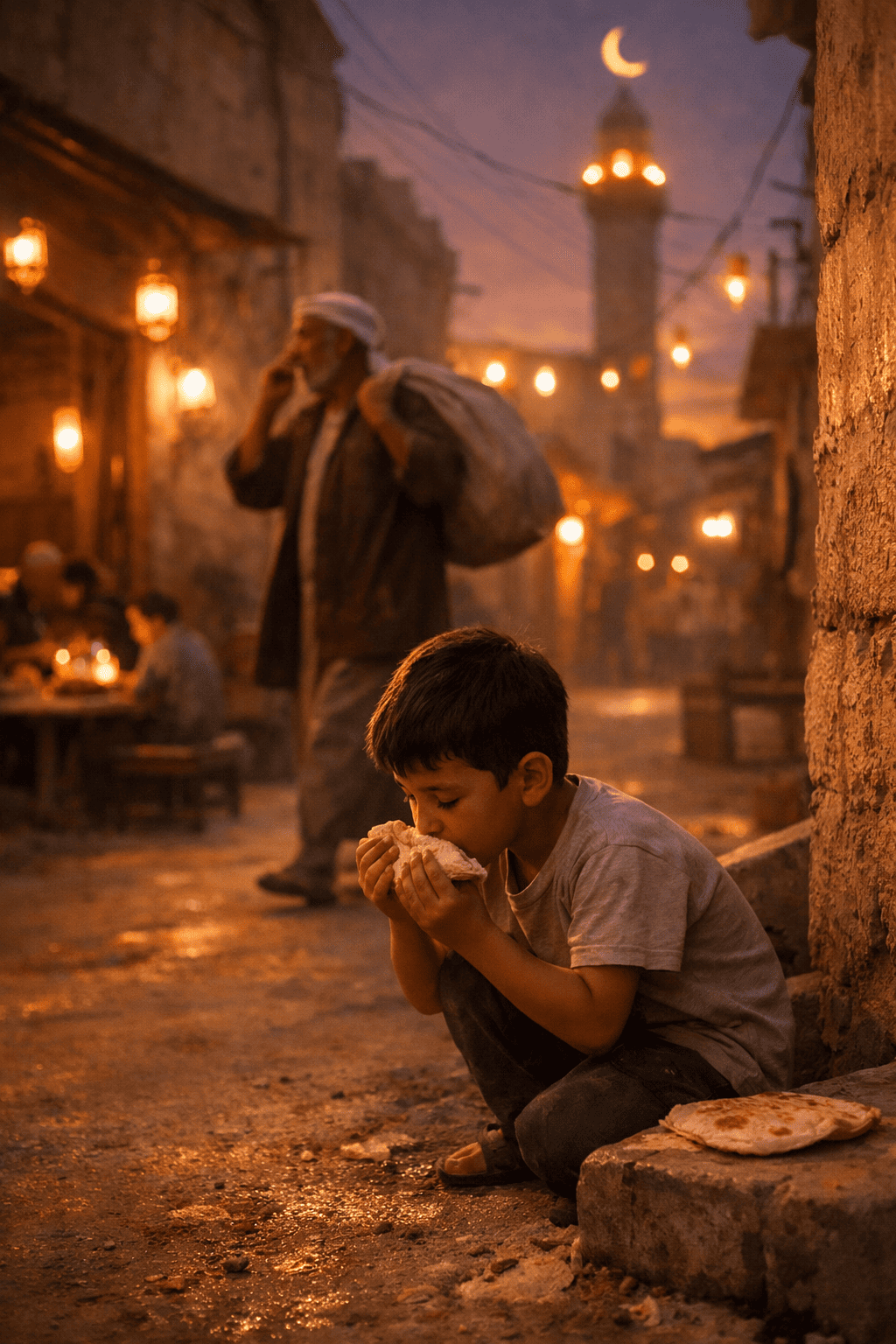
In our culture, bread was never just bread.
It was ni’meh (النعمة) — The blessing.
If a piece fell to the ground, everything paused. You didn’t step over it. You didn’t ignore it. You bent down, brushed it gently, lifted it to your lips, kissed it, and placed it somewhere higher. Because what feeds you deserves respect.
Ramadan made that lesson even deeper.
The house would grow quiet before Maghrib. The sound of spoons against pots. The low murmur of the television. The smell of soup fills every corner. Hunger sharpened gratitude.
And then, in the late afternoon, a familiar call would echo through the neighborhood:
“خبز يابس… خبز يابس…” (Stale bread).
The man carrying a sack over his shoulder walked slowly from street to street. He didn’t shout aggressively. He didn’t plead. His voice was steady, almost woven into the rhythm of Ramadan itself.
Inside every home, a small bag was waiting. Pieces of bread too dry for the table, but never thrown away. Never.
Stale bread had value. It was saved carefully because someone would come for it. And he always did.
A bag would be handed to him at the door. He would nod quietly. Sometimes he would say, “Allah ykhaleelkom.” Then he would move on.
No spectacle. No shame. Just dignity.
Ramadan sharpened the meaning of it all. After fasting all day, even the simplest piece of fresh bread at Maghrib felt sacred. Soft. Warm. Essential.
Bread was survival.
There was an unspoken system in our homes. Fresh bread went to the table. Stale bread went into the bag by the door. Bread that touched the ground was kissed and elevated. Every piece had dignity.
Because bread carried effort, the farmer, the sun, the mill, and the hands that baked. You don’t step on that journey.
Today, the call of “خبز يابس” is rarely heard. Stale bread often ends up in garbage bags instead of someone’s sack. Convenience replaced connection. But the instinct remains.
A piece of bread on the ground still demands attention. It is picked up. Kissed. Placed somewhere higher. Not out of superstition. But out of gratitude. We never stepped on bread. We honored it.
So the next time you see a piece of bread on the ground… pause. Don’t walk past it.
Remember the kitchens where nothing was wasted. Remember Ramadan evenings heavy with gratitude. Remember the voice calling “خبز يابس” through quiet streets. Remember that what feels small to you may once have meant survival to someone else.
Bend down.
Pick it up.
Kiss it if you must.
Place it somewhere higher.
Because bread is never just bread, and how you treat it says everything about how you treat your blessings.