
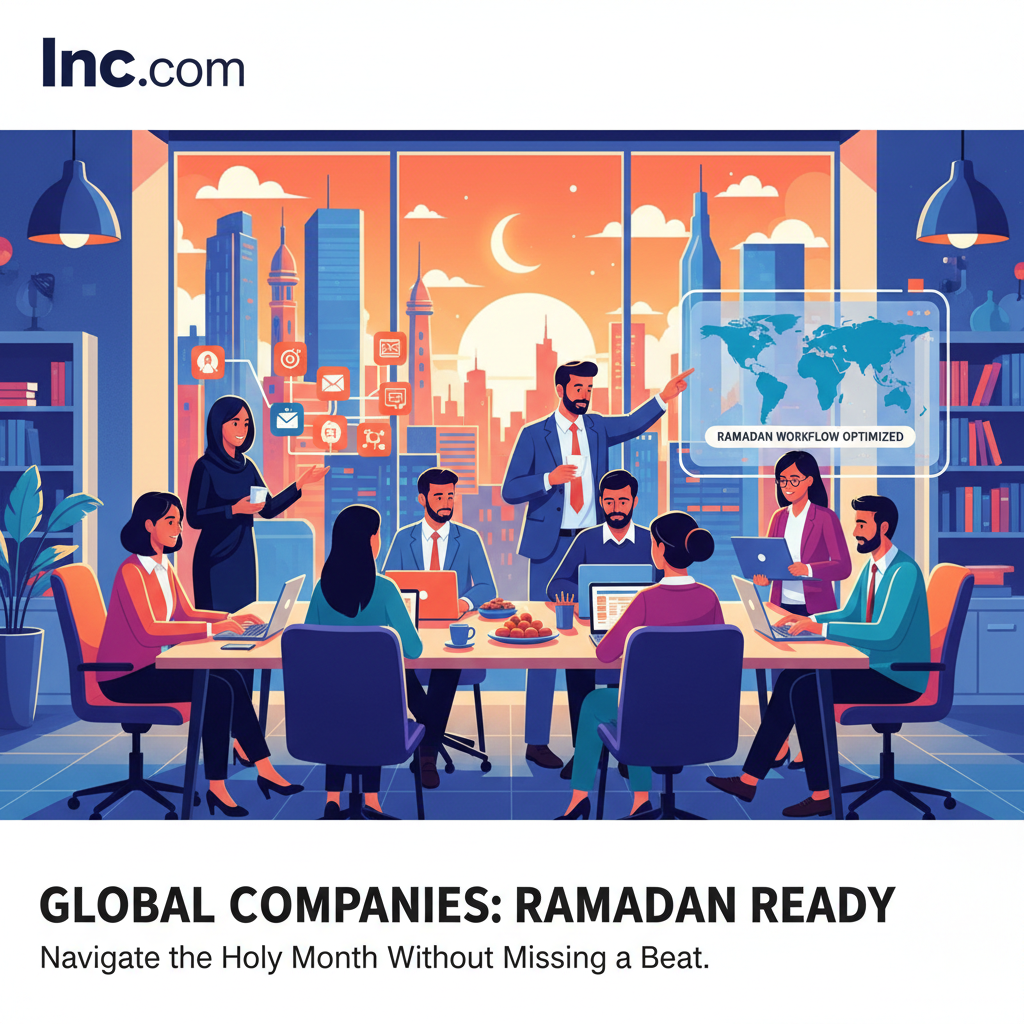
How Global Companies Can Navigate Ramadan in the Middle East Without Missing a Beat
Ramadan is not a slowdown. It’s a shift in rhythm. Companies that understand this unlock trust, loyalty, and stronger regional performance.
Introduction: For Leaders Who Think Ramadan Is a Productivity Dip
If you’re running an international company with operations in the Middle East, Ramadan will test your cultural intelligence more than your operational systems.
From Riyadh to Dubai to Cairo, the holy month reshapes business hours, consumer behavior, media consumption, and employee energy cycles. To outsiders, it can look like a slowdown.
It isn’t.
It’s a recalibration.
And global companies that understand the difference outperform those that try to “push through” it.
Ramadan is observed by over 1.9 billion Muslims worldwide. In the Gulf and broader MENA region, it influences everything from government schedules to retail footfall to advertising performance. Yet every year, international executives arrive unprepared.
This guide is not about religious instruction. It’s about business intelligence.
Part 1: Understanding What Actually Changes During Ramadan
Before you build strategy, understand the mechanics.
Ramadan is a month of fasting from dawn to sunset. That means no food, no water, no smoking during daylight hours. But beyond fasting, it is a period of reflection, generosity, spirituality, and community.
From a business perspective, four things shift:
-
Working hours shorten (legally in many countries)
-
Energy cycles move to evenings
-
Consumer spending spikes in specific sectors
-
Social sensitivity increases
If you misread this as “reduced productivity,” you will mismanage both teams and markets.
Part 2: How International Companies Operating in the Middle East Should Adjust
1. Respect Legal and Cultural Working Hour Reductions
In countries like the UAE and Saudi Arabia, working hours are officially reduced during Ramadan.
If your HQ in New York or London schedules 4pm Dubai calls without context, you are asking fasting employees to stretch through the hardest hours of the day.
Instead:
• Shift important meetings to early mornings
• Prioritize async communication
• Reduce non-essential reporting requirements
• Empower regional leadership to adjust timelines
Ramadan is not the month to launch rigid global process rollouts.
2. Shift Campaign Timing to Evenings
If you operate in consumer sectors, Ramadan is one of the most commercially powerful months of the year.
But timing is everything.
Daytime engagement drops. Post-iftar (after sunset meal) engagement explodes.
Media consumption surges after 8pm. Streaming, social media, e-commerce, and delivery apps all see sharp increases.
Brands that schedule key announcements at noon miss the audience entirely.
Think of Ramadan evenings like Western Black Friday weekends. That’s where the attention is.
3. Lean Into Community and Generosity
Ramadan is deeply associated with giving.
CSR efforts, community programs, food distribution initiatives, and charitable partnerships resonate strongly. Tone-deaf sales messaging does not.
This is the month to:
• Highlight social impact
• Support local charities
• Amplify employee volunteer programs
• Showcase long-term commitment to the region
Transactional marketing underperforms. Purpose-driven storytelling wins.
4. Recalibrate Expectations, Not Standards
Performance doesn’t drop during Ramadan. It shifts.
Employees may have less daytime energy but sharper focus in shorter bursts. Night work increases. Creativity can actually rise because the pace forces prioritization.
Leaders should:
• Clarify top three priorities for the month
• Remove unnecessary meetings
• Avoid surprise deadlines
• Celebrate team effort visibly
What damages morale isn’t fasting.
It’s inflexible leadership.
Part 3: How Global Companies Should Support Employees Observing Ramadan Worldwide
Ramadan is not limited to the Middle East. Your teams in London, Paris, Toronto, or Chicago likely include employees observing the month.
Here’s where inclusive leadership matters.
1. Normalize Flexible Scheduling
Fasting employees wake up before dawn for suhoor (pre-dawn meal). Sleep cycles change.
Allow:
• Earlier start times
• Adjusted break patterns
• Remote work when possible
• Optional shorter lunch meetings
Inclusion is not about policy documents. It’s about operational flexibility.
2. Rethink Food-Centric Corporate Culture
Corporate life often revolves around food: team lunches, happy hours, catered meetings.
During Ramadan, fasting employees may feel isolated from these moments.
Simple adjustments make a difference:
• Avoid mandatory lunch events
• Offer evening team gatherings when possible
• Avoid drawing attention to who is or isn’t eating
Small awareness goes a long way.
3. Train Managers on Cultural Sensitivity
The most common Ramadan mistake globally?
Overcompensation or awkwardness.
Managers don’t need theological knowledge. They need awareness:
• Don’t assume reduced capability
• Don’t single out employees
• Don’t publicly question fasting decisions
• Don’t overload because “they’re leaving early”
Treat Ramadan like any other major cultural observance — with respect and normalcy.
4. Leverage the Moment for Cultural Intelligence
Ramadan can become a powerful cultural bridge inside organizations.
Consider:
• Hosting a voluntary educational session about Ramadan
• Encouraging Muslim employees to share experiences if they wish
• Sending a respectful company-wide Ramadan greeting
Diversity initiatives should not be abstract. They should be lived.
Part 4: Strategic Industries That Should Pay Extra Attention
Certain sectors require deeper Ramadan adaptation:
Retail & E-commerce
Peak sales period. Evening flash sales outperform daytime promotions.
Media & Advertising
Content consumption spikes at night. Ramadan-specific programming dominates.
Hospitality
Iftar and suhoor packages become central revenue drivers.
Banking & Finance
Shorter branch hours but high transaction volumes before Eid.
HR & Talent Acquisition
Recruitment slows during the last 10 days of Ramadan. Plan accordingly.
Understanding industry nuance separates reactive companies from strategic ones.
Part 5: The Leadership Mindset That Makes the Difference
What distinguishes global companies that thrive in Ramadan markets?
They don’t treat Ramadan as an exception.
They treat it as a strategic operating environment.
The Middle East is not a peripheral market. For many sectors, it is a growth engine. Respecting Ramadan is not a courtesy — it’s commercial intelligence.
The leaders who succeed here:
• Empower regional autonomy
• Invest in cultural fluency
• Plan Ramadan strategy 3–6 months in advance
• View cultural adaptation as competitive advantage
Ramadan rewards patience, intentionality, and long-term thinking.
Interestingly, those are the same traits that build resilient companies.
Final Thought: Ramadan Is a Leadership Test
For global executives, Ramadan presents a simple question:
Are you managing a market — or understanding it?
The Middle East operates on rhythm. Ramadan is one of its defining beats.
If your company can adapt without friction, support employees without spotlighting them, and align commercial strategy with cultural reality, you won’t just survive the month.
You’ll earn something far more valuable than revenue.
Trust.
And in this region, trust compounds.