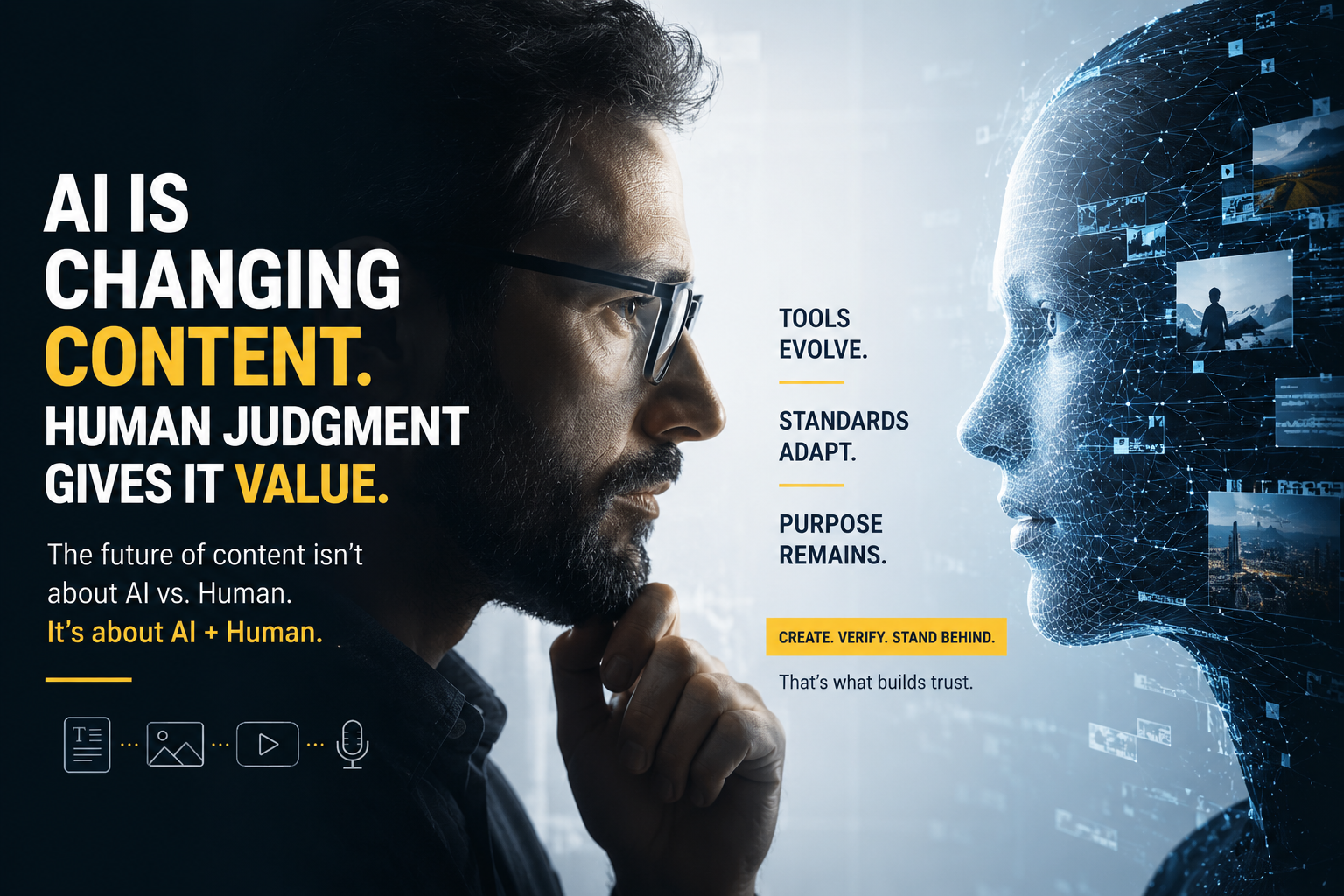
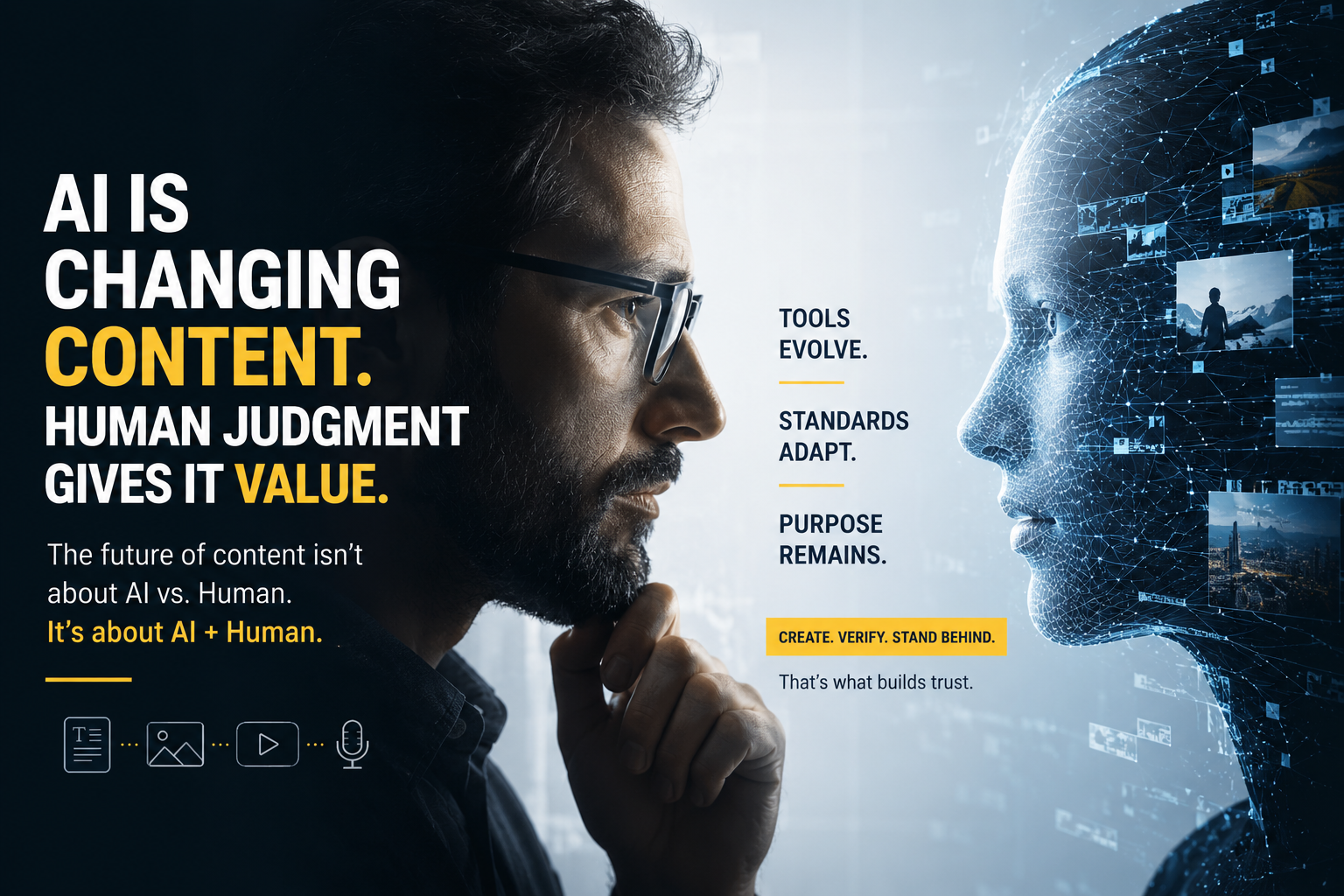
Maybe the future of content is not about whether AI was used or not. Maybe the real question is whether the content is accurate, valuable, responsible, and backed by human judgment. As AI rapidly transforms publishing, media, marketing, and creativity itself, are we resisting the technology… or simply struggling to redefine the role of humans within it?
I’ve been thinking a lot lately about AI-generated content, both personally and professionally.
Whether we like it or not, AI is not a future discussion anymore. It is already reshaping how content is created across text, images, video, avatars, research, editing, and production workflows.
And honestly? It is significantly more efficient.
Like every major technological shift we’ve experienced, there will be positives and negatives. There will be abuse, misinformation, low-quality output, and noise. But there will also be incredible opportunities for creativity, accessibility, speed, and innovation.
What I find particularly ironic is watching some platforms discourage or even penalize publishers for using AI-generated content, while many of those same platforms are simultaneously investing billions into building and advancing AI technologies themselves.
The reality is this:
If I research a topic, evaluate sources, edit the content, verify accuracy, apply judgment, and ultimately stand behind what gets published, does the end user truly care which tool helped produce it?
Or are we still too focused on how content is made rather than whether it delivers value?
I believe many companies are still trying to figure out what the “right balance” looks like. And to be fair, nobody fully knows the answer yet.
But one thing feels increasingly obvious:
AI will become central to content creation.
Not just for articles.
For images.
For videos.
For avatars.
For translation.
For production.
For almost every stage of the creative process.
The real differentiator in the future may not be who uses AI and who doesn’t.
It may be who uses it responsibly, creatively, transparently, and intelligently.
I’ll leave you with one final thought:
What is the real difference to a consumer between an image generated by AI and one licensed from a stock platform like Shutterstock?
Curious to hear how others in media, publishing, and marketing are thinking about this shift.
(And yes… this post was created with the help of AI.)
For transparency, 7awi Media Group has also publicly published its AI Code of Conduct outlining our principles around responsible AI usage, editorial oversight, transparency, and accountability:
7awi Media Group AI Code of Conduct
Disclaimer: These are my personal thoughts and opinions and do not necessarily reflect the views of the company I work for.