
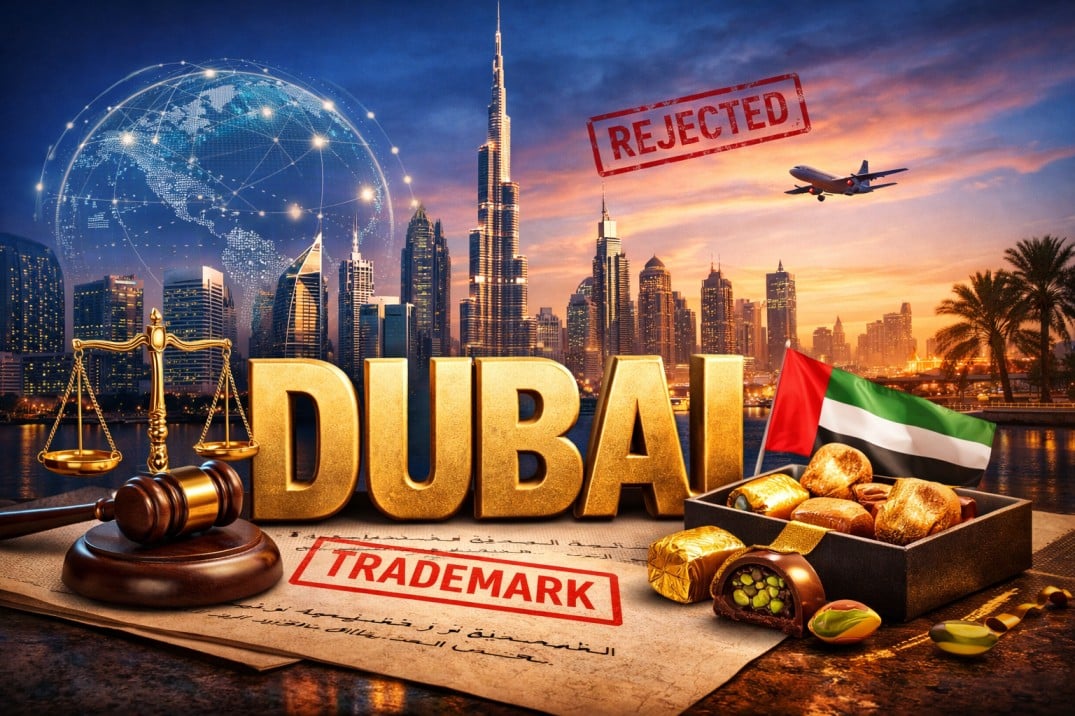
From startups to “Dubai Chocolate,” why one of the world’s strongest city names is protected—and why that protection shapes trust, value, and global brand power
In global branding, very few place names carry the instant credibility, ambition, and aspiration of Dubai. Say the word anywhere in the world and it signals scale, speed, innovation, safety, and luxury. For founders and marketers, the temptation is obvious: add “Dubai” to a company name, product, or campaign and let the city’s reputation do some of the work.
But here is the reality many discover too late: Dubai is not a free word.
It is a protected name, governed by strict trade name and trademark rules, and its misuse can trigger forced rebranding, legal exposure, and reputational damage. This is not bureaucracy for the sake of control. It is brand strategy at city scale.
Dubai is a brand before it is a location
Modern cities compete the same way global companies do. They fight for talent, capital, tourism, and attention. Dubai understood early that reputation is an asset—and like any valuable asset, it must be protected.
The city’s name represents decades of investment in infrastructure, governance, safety, and economic openness. Allowing unrestricted use would quickly dilute what the name stands for. That is why Dubai treats its name less like geography and more like intellectual property tied to trust.
When consumers see “Dubai” attached to a business or product, they subconsciously assume one of three things:
-
A level of official oversight or credibility
-
Higher standards of quality or compliance
-
A connection to the city’s regulatory and business ecosystem
That assumption shapes buying decisions, investor confidence, and international perception. Protecting the name protects the promise.
What “Dubai trademark” actually means in practice
Dubai is not trademarked in the simplistic sense of a logo or slogan. Instead, its protection comes through a layered system of trade name controls, trademark regulations, and government approvals.
In practical terms, this means:
-
Businesses cannot register trade names including “Dubai” without explicit permission
-
Trademarks using “Dubai” may be rejected if they imply official authority or endorsement
-
Marketing that suggests government affiliation without basis can trigger enforcement
The rules apply across sectors: real estate, tourism, finance, technology, media, education, and consumer goods. The goal is clarity. If “Dubai” appears in your name, it must be justified, approved, and accurate.
Why Dubai’s rules are strict—and why that protects everyone
At first glance, these controls may seem restrictive. In reality, they are one of the reasons Dubai maintains such high levels of global trust.
If anyone could launch “Dubai National Group,” “Dubai Official Investments,” or “Dubai Global Authority,” confusion would be immediate and credibility would collapse. Instead, Dubai enforces clear separation between public institutions and private enterprise.
This discipline is one of the quiet reasons international investors feel comfortable doing business in the city. The name means something, and that meaning is defended.
The Dubai Chocolate phenomenon: when a name goes viral before it’s protected
No recent example illustrates this better than the Dubai Chocolate phenomenon.
What began as a locally made chocolate, amplified by social media, quickly became a global trend. Videos spread across TikTok and Instagram. Visitors started asking for it by name. Retailers abroad began selling pistachio-filled, gold-wrapped chocolates branded as “Dubai Chocolate.”
And then the market flooded.
Products made outside the UAE.
Unrelated producers.
No clarity on origin, quality, or ownership.
Almost overnight, “Dubai Chocolate” became a generic label rather than a defined product. The name created the demand—but the lack of early protection allowed imitation to outrun authenticity.
This is brand dilution happening in real time.
What Dubai Chocolate teaches us about brand power
The lesson here goes far beyond confectionery.
First: Dubai adds instant value.
The product did not go viral despite the name—it went viral because of it. “Dubai” signaled luxury, trend leadership, and indulgence before consumers even tasted it.
Second: when protection lags, control disappears.
Once a name travels faster than its legal framework, the market fills the gap. Enforcement becomes harder once consumer perception fragments.
Third: misuse damages more than creators—it risks the city’s reputation.
Low-quality products riding on Dubai’s name do not just confuse buyers. They chip away at what the city stands for.
This is precisely why Dubai’s naming rules exist.
When using “Dubai” hurts more than it helps
For startups and brands, attaching Dubai’s name can backfire.
Investors, regulators, and partners in the UAE read names carefully. A brand that stretches or misuses the word raises uncomfortable questions:
If the name is misleading, what about governance?
If approvals were bypassed, what about compliance?
In many cases, being forced to rebrand later costs far more than building correctly from day one.
Why global brands avoid using “Dubai” in their core identity
Look closely at major international companies operating in the UAE. Most proudly state they are based in Dubai or headquartered in Dubai, but few embed the word into their brand name.
This is intentional.
Global brands understand that Dubai already provides the credibility. Associating through presence, performance, and contribution is stronger—and more scalable—than claiming it through naming.
Dubai becomes the platform, not the label.
The name as a filter for serious ambition
Dubai’s approach also acts as a natural filter. Founders who build strong brands without leaning on the city’s name demonstrate confidence in their value proposition. They rely on execution, not borrowed prestige.
Ironically, these are the brands that strengthen Dubai’s reputation the most. They succeed because they operate within the ecosystem, not because they appropriate its name.
What founders and marketers should do instead
The smarter strategy is simple: earn the association, don’t force it.
Use Dubai in context, not identity.
Tell the story of why being in Dubai matters.
Highlight regulation, infrastructure, talent, and access.
Let the city be your proof point, not your shortcut.
Because as the Dubai Chocolate story shows, the name alone can create hype—but only authenticity and protection sustain value.
So can you use the word “Dubai”?
The real question is not whether you can use the word Dubai.
It is whether your brand truly reflects what Dubai stands for.
In a city built on clarity, ambition, and trust, the strongest brands are not the ones that borrow the name—but the ones that make it stronger by association.