
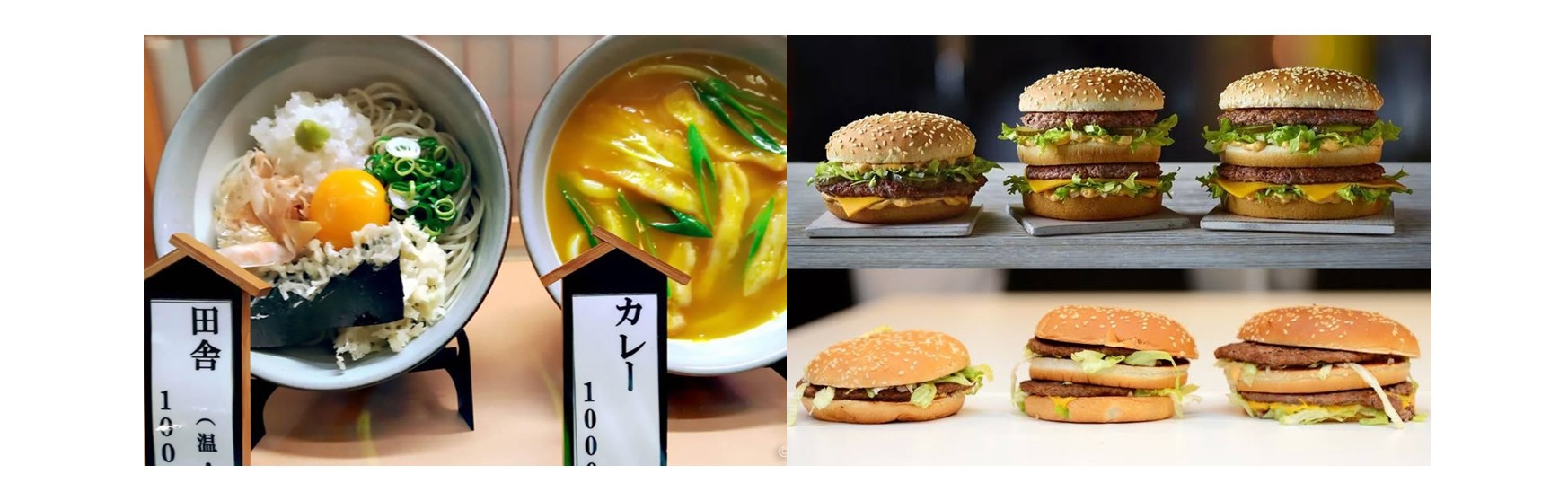
Why Food Product Ads in Japan Look Exactly Like the Real Thing — And What the World Can Learn
Walk into any convenience store in Tokyo, Osaka, or Kyoto and pick up a packaged meal, snack, or dessert. What you see on the packaging is almost identical to what you’ll find inside. The glossy image of a sandwich, the perfectly arranged bento, or the creamy swirl of a dessert is not an exaggeration. It is a promise. And more often than not, it is a promise that is kept.
In a world where food advertising often leans heavily on enhancement, styling tricks, and visual exaggeration, Japan stands out. The gap between expectation and reality is remarkably small. This is not accidental. It is the result of a deep cultural mindset, reinforced by consumer expectations, business philosophy, and a long-term approach to brand building.
A Culture Built on Trust
At the heart of this phenomenon is trust.
In Japan, trust is not a marketing slogan. It is a societal value that shapes how businesses operate and how consumers make decisions. When a customer buys a product, there is an implicit understanding that the brand has respected them enough to deliver exactly what was promised.
This creates a different kind of relationship between brands and consumers. It is less transactional and more long-term. A single misleading image is not just a minor issue; it can damage credibility in a way that takes years to rebuild.
That is why brands avoid overpromising. Not because they cannot create more appealing visuals, but because they choose not to risk breaking that trust.
The Role of Consumer Expectations
Japanese consumers are highly detail-oriented. They notice the small things — portion size, ingredient placement, texture, color. If a product looks different from what was advertised, it does not go unnoticed.
This creates a feedback loop. Brands know their audience is discerning, and consumers expect consistency. Over time, this has elevated the standard across the entire market.
It is not about impressing the customer once. It is about meeting expectations every single time.
Precision as a Way of Life
Japan’s reputation for precision extends far beyond technology and manufacturing. It is embedded in everyday experiences, including food.
From the way meals are prepared to how they are presented, there is a strong emphasis on detail. Packaging and advertising are simply extensions of that philosophy.
When a product is photographed, it is often styled to reflect the actual product as closely as possible. The goal is not to create an idealized version, but to capture a realistic one at its best.
This is a subtle but important difference. In many markets, food photography is about aspiration. In Japan, it is about accuracy.
The Influence of “Sampuru”

One of the most iconic examples of this commitment to realism is the use of “sampuru” — hyper-realistic plastic food models displayed outside restaurants.
These displays are not decorative. They are functional. They show customers exactly what they will receive, down to portion size and presentation.
For decades, this practice has shaped consumer expectations. People are used to seeing a dish and then receiving something that looks almost identical.
That mindset naturally extends to packaged food and advertising. The expectation is clear: what you see should match what you get.
Regulatory and Industry Standards
While culture plays a major role, there are also guidelines and regulations that discourage misleading advertising.
Japan has strict consumer protection frameworks that address false or exaggerated claims. Even when not explicitly enforced through heavy penalties, the standards are well understood within the industry.
More importantly, brands often self-regulate. The reputational risk of being perceived as misleading is far greater than any short-term gain from exaggerated visuals.
This creates an environment where honesty becomes the default approach, not the exception.
Long-Term Thinking Over Short-Term Gains
One of the most defining characteristics of Japanese business culture is its long-term orientation.
Brands are built over decades, not quarters. Success is measured not just by immediate sales, but by sustained customer loyalty.
In this context, misleading advertising is not just unethical — it is bad business.
A customer who feels disappointed once may not return. A customer who consistently receives exactly what they expect is far more likely to become loyal.
This is why Japanese brands invest in consistency. It is not about winning attention for a moment. It is about earning trust over time.
The Economics of Honesty
There is also a practical side to this approach.
When products consistently match their packaging, there are fewer complaints, fewer returns, and less friction in the customer experience. This reduces operational inefficiencies and strengthens brand reputation.
In contrast, markets that rely heavily on visual exaggeration often deal with a gap between expectation and reality. That gap can lead to dissatisfaction, even if the product itself is acceptable.
Japan minimizes that gap. And in doing so, it creates a smoother, more predictable consumer experience.
A Different Approach to Marketing
What is particularly interesting is how this philosophy reshapes marketing itself.
Instead of relying on dramatic visuals, brands focus on clarity, quality, and authenticity. The product becomes the hero, not the illusion around it.
This does not mean Japanese advertising is less creative. It simply channels creativity differently. The emphasis is on storytelling, design, and presentation, rather than exaggeration.
The result is a form of marketing that feels grounded and credible.
Lessons for Global Brands
There is a powerful lesson here for businesses operating in highly competitive markets.
In many parts of the world, marketing has become a race to capture attention. Bigger claims, more polished visuals, more aggressive positioning. But this often comes at the cost of authenticity.
Japan offers an alternative model.
It shows that accuracy can be a competitive advantage. That delivering exactly what is promised can be more powerful than overpromising and underdelivering.
For global brands, especially those operating in markets like the UAE where consumers are exposed to both local and international products, this is particularly relevant.
Consumers today are more informed, more connected, and more vocal than ever before. Trust is becoming a key differentiator.
And trust is built through consistency.
Why It Matters More Than Ever
In the age of social media, the gap between expectation and reality is quickly exposed.
A single post comparing advertised visuals to the actual product can go viral. What was once a minor discrepancy can now become a public issue.
This makes the Japanese approach even more relevant.
By aligning marketing with reality, brands reduce the risk of backlash and build a more resilient reputation.
The Bigger Picture
Ultimately, the reason food ads in Japan look exactly like the real thing is not about rules or techniques. It is about mindset.
It is about respecting the customer enough to be honest.
It is about understanding that trust, once lost, is difficult to regain.
And it is about recognizing that long-term success is built on consistency, not shortcuts.
Final Thought
In a world obsessed with perception, Japan quietly reminds us of something simple:
The most powerful marketing is not what you say.
It is what you deliver.
And when those two align perfectly, you do not just sell a product.
You build a brand that lasts.

PS: Compare with the Burger ads in other parts of the world.